Walk into a butcher shop in South Philly, Fishtown, or Northeast Philadelphia. Customers often make purchasing decisions within seconds. Before checking the price or grade of a cut, they notice how the meat looks in its packaging.
They consider the color of the beef, notice how clean the packaging looks, and check whether liquid has collected at the bottom of the package. A flimsy tray may crack under the weight of a ribeye roast.
A damaged package may also leak meat juices onto the display shelf. Either problem could cost you a sale and affect your shop’s reputation.
Selecting dependable meat trays for Philadelphia retailers involves more than choosing the cheapest bulk case available. The right tray does several jobs. It helps protect product freshness, reduces the risk of leaks in grocery bags, and keeps display cases looking sharp. It can also help cut down on inventory shrinkage caused by damaged packaging.
Here is how butcher shops, independent grocers, and high-volume meat markets can match the right tray material, depth, and sizing to every protein in their case.
Why Tray Selection Directly Impacts Shelf Life and Profit
Fresh meat is one of the most perishable products in a grocery store or butcher shop, making proper packaging and handling particularly important.
After a primal cut is processed into steaks, chops, or ground meat, moisture naturally escapes. This liquid, known as purge, can make packages look less appealing and create cross-contamination risks if it leaks.
A well-designed tray should be paired with suitable overwrap film or lidding. Together, these materials help manage oxygen exposure and moisture.
For fresh beef and lamb, oxygen exposure affects meat color. Oxygen-permeable overwrap films can help maintain the bright red appearance associated with conventional retail meat displays.
Poultry and seafood have different packaging requirements. They benefit from sturdy trays paired with suitable absorbent pads and wrapping materials to help contain excess juices.
Good packaging is a worthwhile investment. It minimizes damaged packages, reduces the need to rewrap products during morning display checks, and helps maintain a clean, presentable meat counter.
Understanding Common Meat Tray Materials
Various cuts of meat and merchandising styles require different types of trays. Understanding how each material performs in refrigerated cases makes it easier to choose the right tray.
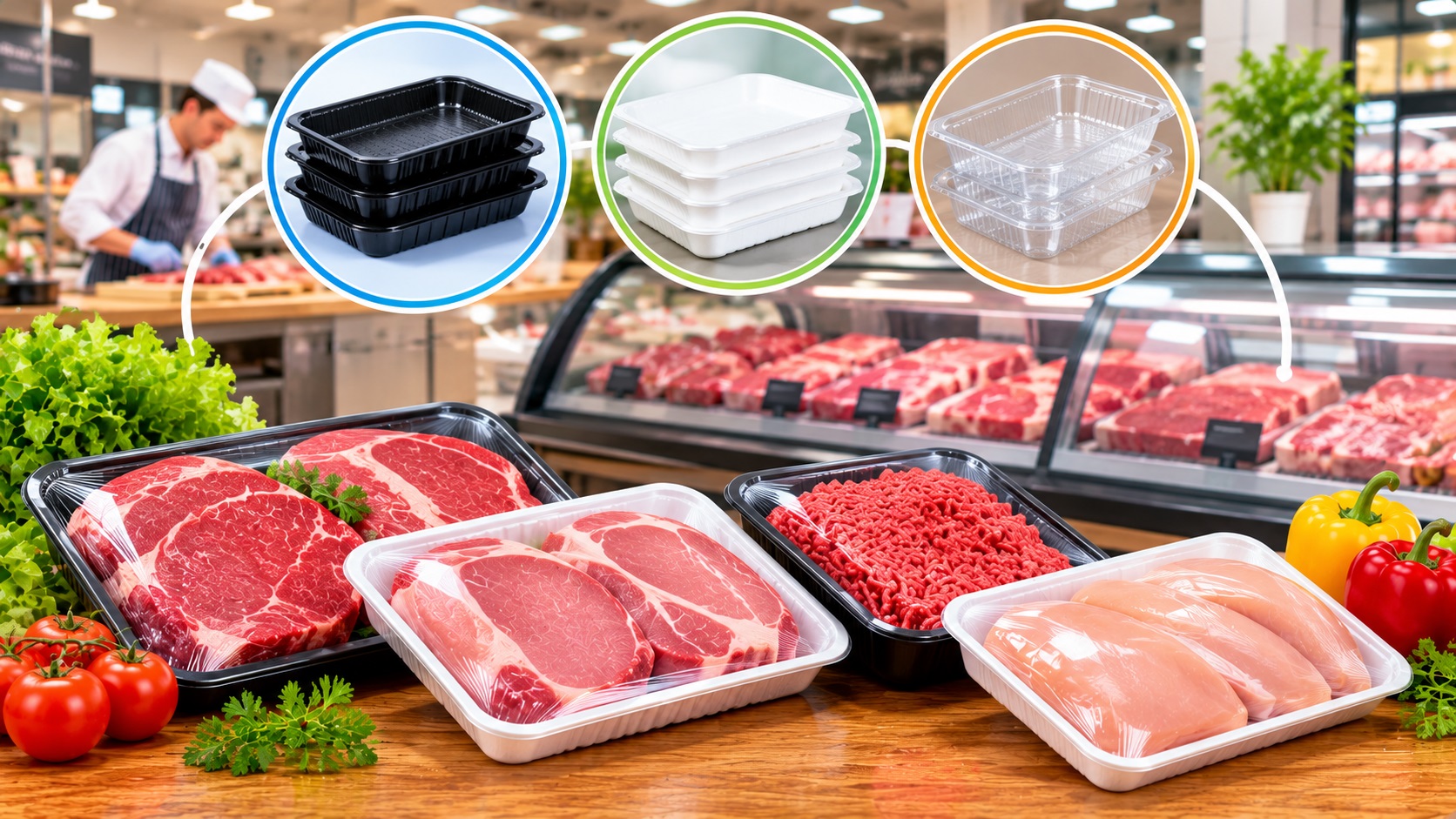
Expanded polystyrene foam trays are still widely used in busy supermarkets and neighborhood butcher shops. They are lightweight, offer insulation, and are generally inexpensive.
Foam trays with suitable thickness and strength can withstand the pressure of manual or automatic wrapping. They are available in colors such as white, black, and yellow, which help distinguish different meat products in the display case.
Some stores wish to improve product presentation or meet specific packaging goals. Rigid plastic trays, such as PET or polypropylene, are another option. Clear plastic trays offer good product visibility, while rigid construction provides additional support for heavier cuts.
These trays can work particularly well for marinated meat or gourmet sausages. Certain PET and polypropylene trays are also suitable for modified atmosphere packaging (MAP) when paired with compatible barrier films and sealing equipment.
In addition, molded fiber and paperboard trays offer alternatives for businesses looking to reduce their reliance on conventional plastic packaging. Their suitability depends on moisture resistance, food-contact requirements, and available disposal options.
Matching Tray Sizes and Depths to Your Cuts
An oversized tray can make even a generous steak look smaller, while placing a thick roast in a shallow tray can stretch the film to the point of tearing. To keep wrapping stations efficient and display rows uniform, standardize tray sizes for similar cuts.
For some cuts, shallow trays are best. These include thinly sliced cutlets, bacon, burger patties, and boneless chicken breasts. Shallow trays keep these products visible without adding unnecessary packaging depth.
Standard-depth trays work well for many everyday cuts, including pork chops, steaks, ground beef, and multi-piece packs. Deeper trays provide additional room for thick roasts, whole poultry, and family-size portions.
Choose a tray that supports the product’s weight without forcing the wrapping film to stretch excessively.
Color coding can also help staff organize the meat department. Many markets use black trays to make marbled beef steaks stand out, white trays for everyday cuts of pork and veal, and yellow trays to distinguish fresh poultry in the case.
Frequently Asked Questions
How do butcher shops and supermarkets choose the right meat trays?
Butcher shops and supermarkets choose meat trays by weighing several factors. They evaluate the weight and moisture level of each cut, consider the type of wrapping equipment they use, and look at refrigerated display conditions and visual presentation goals.
They need adequate structural support, effective moisture containment, and a reasonable cost per unit. Getting this right helps protect product quality without slowing down back-of-house wrapping teams.
What types of meat trays are commonly used by grocery stores and butcher shops?
There are three common options. Expanded polystyrene foam trays suit everyday case wrapping. Rigid PET or polypropylene plastic trays work well for packaging that requires additional structural support.
Molded fiber and paperboard trays are alternatives for businesses looking to reduce conventional plastic use, provided the trays meet the moisture resistance and food-contact requirements of the products being packaged.
What size meat trays should supermarkets use for different meat products?
Supermarkets typically match tray size to the cut. Small, shallow trays suit single steaks, chops, and thin cutlets.
Medium, standard-depth trays work for ground beef and multi-piece packs. Deep-well trays accommodate whole poultry, large roasts, and bulk family packs.
Tray dimensions and numbering can vary by manufacturer, so check the product specifications before placing a bulk order.
Where can Philadelphia businesses buy wholesale meat trays and wrapping film?
Philadelphia butcher shops, supermarkets, and food markets can source bulk meat trays and commercial wrapping film from local wholesale packaging distributors such as American Eagle Packaging Co.
Pairing Trays With Absorbent Pads and Wrapping Film
Even the sturdiest tray performs better when paired with the right supporting supplies. Placing a food-grade absorbent meat pad beneath high-moisture cuts like chicken thighs, liver, or fresh fish helps absorb excess purge before it pools at the corners.
Your overwrap film matters just as much as the tray underneath. High-clarity PVC or polyolefin meat films can provide good product visibility and cling.
For bone-in cuts, choose film with suitable puncture resistance. Anti-fog films can also help maintain product visibility in refrigerated display cases.
Sourcing reliable meat trays in Philadelphia is only half the job. Order compatible film rolls at the same time to support efficient wrapping and reduce the risk of torn packages during peak prep hours.
Stocking Reliable Packaging Supplies in Philadelphia
Running out of popular tray sizes before a holiday weekend or during a busy Friday shift can force employees to use unsuitable trays, slowing down prep and creating problems with case presentation.
At American Eagle Packaging Co., we provide packaging supplies for the daily demands of grocery stores, butcher counters, and food markets throughout the area.
Located on Roosevelt Boulevard in Philadelphia, we offer a range of meat tray sizes, wrapping films, and paper packaging products, along with local delivery service.
If you’re looking for reliable meat trays in Philadelphia, reach out to our team. We’ll help you find suitable packaging for your meat department’s daily operations.